Scandinavian interiors ideas
 Save
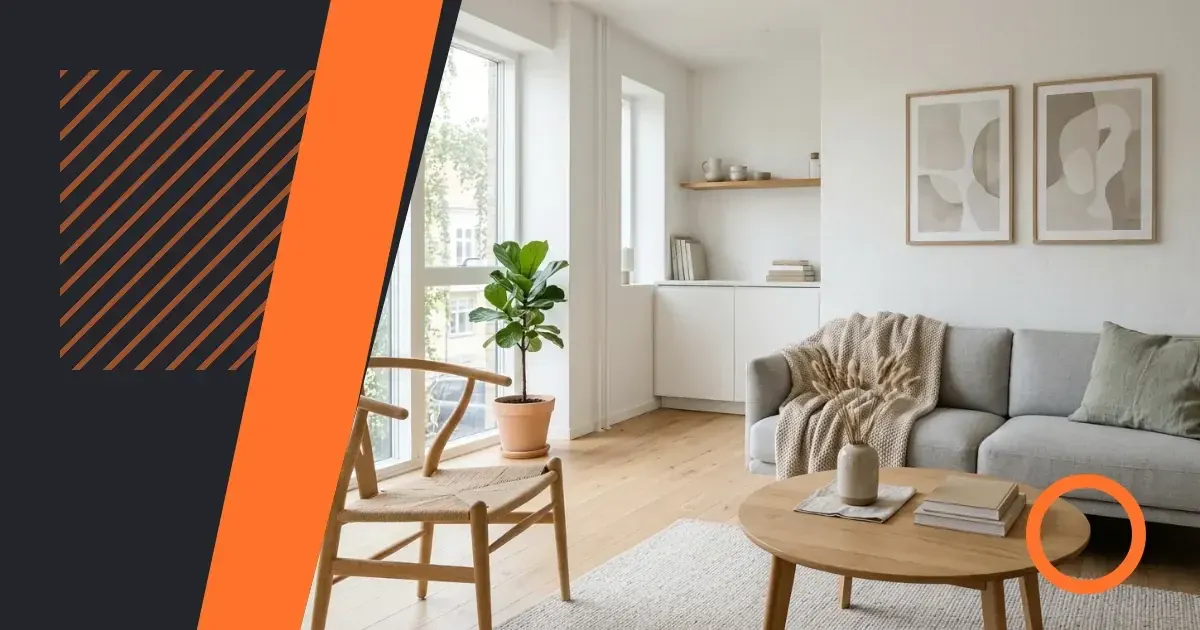
Scandinavian interior design brings together simplicity, functionality and natural warmth in a way that works for everyday living. Nyde explores the principles behind this approach, from the materials and colours that define it to the practical choices that make a room feel both comfortable and uncluttered.
Natural materials and texture
Wood sits at the heart of Scandinavian interiors, most often in pale tones such as birch, ash or pine. It appears in floors, furniture frames and shelving, bringing warmth without weight. Linen, wool and cotton add softness through cushions, throws and curtains, while stone and ceramics introduce cooler textures in smaller pieces.
Layering these materials creates depth: a wooden dining table with linen placemats, wool seat pads and a ceramic jug. The texture does the work that pattern might do in other styles, keeping the palette restrained while avoiding flatness.
Colour palette and light
White walls form the foundation, reflecting daylight and making rooms feel larger. Off-whites, greys and soft beiges follow, with black or charcoal used sparingly in metal fixtures, picture frames or a single piece of furniture. Muted greens, blues or terracotta may appear in textiles or artwork, always in low saturation.
Natural light is treated as a design element. Windows are often left undressed or fitted with sheer linen that filters rather than blocks. In winter months, candles and warm-toned bulbs compensate, placed at different heights to avoid a single overhead glare.
Furniture with purpose
Each piece serves a clear function, and most serve more than one. A bench with storage underneath, a coffee table that doubles as a work surface, a sofa bed in a guest room. Lines are clean, legs are visible, and nothing feels heavy or over-upholstered.
Scale matters: furniture sits lower to the ground, and pieces are proportioned to the room rather than filling it. A small apartment might hold a two-seater sofa and a single armchair instead of a full corner suite, leaving space to move and breathe.
Storage that works quietly
Open shelving displays a few considered objects—books, plants, ceramics—while closed cupboards hide the rest. Built-in storage keeps walls smooth and floors clear. Baskets in natural fibres hold items that need to be reached often but not seen constantly.
The principle is containment without clutter: everything has a place, and that place is easy to reach. A coat rack near the door, shallow drawers for paperwork, hooks inside cupboard doors. The systems are practical first, and their simplicity makes them easy to maintain.
Bringing the outside in
Houseplants introduce life and colour—ferns, trailing pothos, rubber plants in simple ceramic or terracotta pots. They sit on windowsills, shelves and floors, softening corners and improving air quality. Branches or dried grasses in a tall vase add seasonal variety without lasting commitment.
Natural views are framed rather than competed with. A window overlooking trees or a garden is left unobstructed; a view of a brick wall might be softened with a translucent blind and indoor greenery that draws the eye inward instead.
Personal touches without excess
A Scandinavian interior is not a showroom. Family photographs, children's drawings, a stack of well-loved books, a blanket left folded over a chair—these details make the space lived-in. The difference lies in curation: a few meaningful items rather than surfaces covered in ornaments.
Artwork tends toward abstract prints, black-and-white photography or simple line drawings, often in pale wooden frames. A single large piece creates more impact than a crowded gallery wall, and rotating smaller prints keeps the room from feeling static.
Making it work in practice
Start with what you have. Pare back ornaments and see what remains; rearrange furniture to let light reach further into the room. Swap heavy curtains for lighter fabric, or remove them altogether if privacy allows. Paint one wall white and observe how the space changes before committing to the whole room.
- Clear surfaces and assess what needs to stay within reach.
- Choose one wood tone and work with it across furniture and flooring.
- Add texture through textiles—wool, linen, cotton—in neutral tones.
- Introduce plants gradually, starting with low-maintenance varieties.
- Edit ornaments down to a few pieces that matter to you.
The approach is incremental. A room does not transform overnight, and forcing every principle at once often results in a space that feels staged rather than settled. Work with the light you have, the layout you live with, and the budget that makes sense.
For readers interested in maximising light and space, Space and light: making a small bedroom feel larger offers complementary ideas. Those looking to add greenery will find Understanding biophilic design a useful next step.
Frequently asked questions
What defines Scandinavian interior style?
Scandinavian style is defined by simplicity, functionality and natural materials, with a focus on light, neutral colours and furniture that serves clear purposes. It balances warmth and minimalism without feeling sparse.
Which colours work best in a Scandinavian interior?
White, off-white, soft greys and beiges form the foundation, with black or charcoal used sparingly. Muted greens, blues or terracotta may appear in textiles or artwork, always in low saturation to keep the palette calm.
How do you add warmth to a Scandinavian room?
Warmth comes from natural wood in pale tones, layered textiles such as wool throws and linen cushions, and soft lighting from candles or warm-toned bulbs. Plants and personal items also make the space feel lived-in rather than stark.