Maximalist interior design: confidence, colour and character
 Save
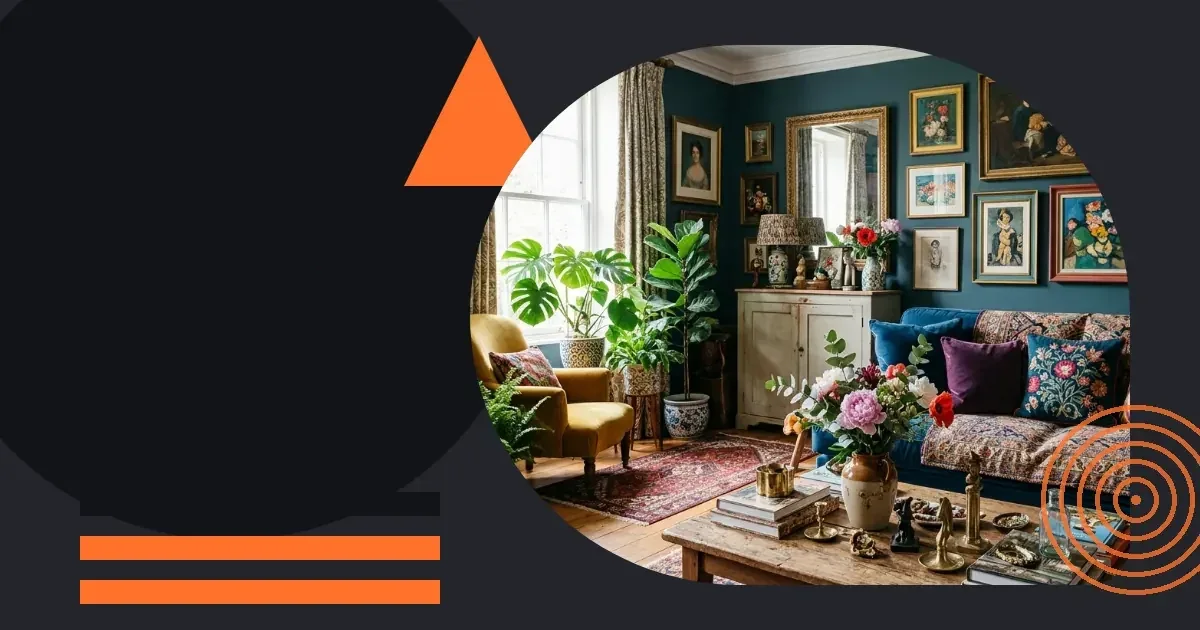
Maximalist interior design is a deliberate approach that celebrates abundance, layering colour, pattern, texture and objects to create rooms with personality and warmth. It is not clutter or excess for its own sake, but a considered style built on repetition, balance and personal meaning. Nyde walks through the principles that make maximalism work, the choices that hold a layered room together, and the practical steps to start building a space that feels fully yours.
Core principles of maximalist style
Maximalism operates on intention. Every piece in a maximalist room earns its place, whether through colour, form, memory or function. The style allows for bold pattern combinations, saturated hues and dense arrangements, but always with a thread that ties the elements together.
Repetition creates cohesion. A room might mix florals, geometrics and stripes, yet hold together because a single tone appears in each pattern, or because every textile shares a similar weight. Layering works when there is something for the eye to follow from one surface to the next.
Maximalist interiors favour personal collections over generic arrangements. Books stacked on surfaces, art propped against walls, textiles thrown over chairs—these are not afterthoughts but part of the structure. The style invites you to display what you use and love, rather than hiding it behind closed doors.
Colour and pattern in maximalist rooms
Maximalism embraces strong colour, often across multiple walls, furnishings and accessories. Deep jewel tones, rich earth shades and saturated brights sit alongside one another, their intensity balanced by the sheer quantity of colour in the space. A single bold wall can feel jarring; a room wrapped in bold choices feels intentional.
Pattern mixing is central to the style. Florals pair with stripes, paisleys meet checks, and animal prints layer over geometric rugs. The key is shared rhythm: patterns of similar scale can compete, while varied scales—a large-scale floral with a fine stripe—allow each to be read distinctly. Colour provides the other anchor. When patterns share a hue, they read as related even when their motifs differ.
Maximalist rooms rarely leave surfaces bare. Walls carry art in mismatched frames, shelves hold ceramics and books, and textiles appear in layers—curtains over blinds, throws over upholstery, cushions in varied fabrics. Each layer adds depth without overwhelming, provided there is visual connection between them. If you are considering colours that go together, maximalism offers a different path: rather than limiting the palette, it expands it with purpose.
Texture and material variety
Maximalism values tactile contrast. Velvet sits beside linen, lacquered wood against rough ceramics, polished brass near matte stone. The variety keeps the eye moving and gives a room physical warmth. A space filled with pattern but lacking textural contrast can feel flat; maximalism avoids this by mixing finishes deliberately.
Fabrics layer freely. A sofa might hold velvet cushions, a woven throw, a silk bolster and a printed linen pillow, each contributing a different surface quality. Rugs layer over rugs, particularly when one is worn or patterned and the other provides a grounding neutral or a secondary pattern.
Hard surfaces and decorative detail
Maximalist rooms mix furniture styles and periods. A mid-century sideboard might hold contemporary ceramics beside inherited silver, all beneath a gilt-framed painting. The combination works when materials and proportions create balance—heavy wood grounded by metal legs, ornate frames offset by plain walls in bold colour.
Decorative details matter. Picture rails, cornicing, panelling and skirting boards are painted in contrasting or complementary tones rather than hidden. Hardware—handles, hinges, curtain poles—becomes part of the composition, often in brass, copper or painted finishes that stand out rather than blend in.
Furniture arrangement and spatial balance
Maximalist rooms feel full but not impassable. Furniture groupings create intimacy, with seating drawn closer together and occasional tables within reach. The style favours lower, layered arrangements over spare, elevated pieces. A chair might sit beside a stack of books rather than a single side table, or a pouf might replace a coffee table, allowing flexibility.
Balance in a maximalist room comes from distributing visual weight. A heavily patterned wall pairs with a quieter opposite wall—or with another bold pattern that matches it in intensity. A large piece of furniture anchors one side of the room; a tall plant, a bookshelf or a gallery wall anchors the other. Symmetry is not required, but equilibrium is.
Storage becomes display. Open shelving, plate racks, hooks and pegboards let everyday objects contribute to the room's character. Books arranged by colour, dishes stacked by pattern, coats hung in a considered cluster—these are maximalist gestures that make practical use visible. For thoughts on arrangement in smaller rooms, the guide to choosing a sofa for a small living room offers a starting point that maximalism can build upon.
Art and collections as structure
Maximalist walls carry art densely. Frames touch or nearly touch, filling a wall from skirting to picture rail or from floor to ceiling. The effect is a single composition made of many pieces, rather than individual artworks floating on a plain surface. Frames need not match; variety in frame style, colour and width adds to the richness.
Collections are displayed in quantity. A single ceramic bowl on a shelf is minimalist; two dozen bowls stacked, leaning and grouped is maximalist. The same applies to books, prints, mirrors, textiles and objects from travel. Quantity is part of the statement, and arrangement is loose rather than rigid—items lean, stack and overlap.
Personal meaning and curation
Maximalism thrives on the personal. Rooms built from inherited pieces, charity-shop finds, travel souvenirs and handmade items carry more character than those filled with matching purchases. The style rewards patience—building a maximalist room over time, adding layers as you find pieces that speak to you, rather than buying everything at once.
Curation still matters. Not every object you own needs to be visible. Maximalism is about choosing what to show, not showing everything. The question is whether an item contributes to the room's mood, colour story or personal narrative, not whether it fits a predetermined scheme.
Practical steps to build a maximalist room
Starting a maximalist interior requires confidence and a willingness to layer gradually. Begin with one room and a clear sense of the mood you want—rich and cosy, bright and energetic, eclectic and collected. The following steps offer a path forward.
- Choose a colour direction. Pick a palette of three to five colours you want to live with, including at least one saturated tone. Paint walls in one of these, or paper them in a bold pattern.
- Layer pattern in textiles first. Add cushions, throws and rugs in varied patterns that share a colour or two with your palette. Start with three patterns of different scales.
- Fill one wall with art or objects. Hang frames close together, or arrange shelves densely with books, ceramics and prints. Let this wall set the room's character.
- Introduce textural contrast. Add a velvet cushion if your sofa is linen, a rough jute rug if your floor is smooth, a brass lamp if your furniture is wood. Vary the surfaces.
- Bring in a large-scale element. A bold curtain fabric, a patterned rug, an oversized mirror or a tall plant anchors the space and signals intention.
- Edit for balance, not minimalism. Step back and assess weight and colour distribution. Move pieces, add or remove, until the room feels abundant but not chaotic.
Common concerns and how to address them
Maximalism can feel risky if you are used to restraint. The worry that a room will look messy or overwhelming is common, but maximalism and mess are not the same. Mess lacks structure; maximalism has it, even when the structure is intuitive rather than formal.
If a room feels too busy, check for repetition. A space with no repeated colours or motifs can look scattered. Adding one more instance of a hue or pattern often pulls things together rather than adding to the chaos. Alternatively, calm one surface—a plain ceiling, a solid-colour sofa—to give the eye a place to rest.
Another concern is cost. Maximalism does not require expensive pieces. Charity shops, markets, inherited items and DIY projects contribute as much character as new purchases, often more. The style rewards resourcefulness and the willingness to mix high and low, old and new.
Maximalism compared with other approaches
Maximalist interiors differ from minimalist ones in philosophy as much as appearance. Minimalism seeks calm through reduction, asking what can be removed. Maximalism seeks richness through addition, asking what more can be brought in to make a space feel complete. Neither is better; they serve different temperaments and needs.
The table below compares the two approaches across key decisions.
| Aspect | Maximalism | Minimalism |
|---|---|---|
| Colour | Multiple saturated tones, bold contrasts | Limited palette, often neutral |
| Pattern | Layered, varied scales and motifs | Minimal or absent |
| Objects | Collections displayed, surfaces full | Few items, surfaces clear |
| Texture | High contrast, many materials | Subtle variation, fewer materials |
Maximalism also differs from eclectic style, though the two overlap. Eclectic interiors mix styles and periods, but can do so with restraint. Maximalism is eclectic by nature, but adds density and abundance to the mix. A room can be eclectic without being maximalist, but a maximalist room is almost always eclectic. Those exploring other design philosophies might find the guide to mid-century modern style offers a contrasting approach rooted in simplicity and form.
Adapting maximalism to small spaces
Maximalism works in small rooms when the layering is deliberate. A compact space filled with colour, pattern and objects can feel intimate rather than cramped, provided there is cohesion. The same principles apply: repetition, balance and a clear colour thread.
In a small room, maximalism benefits from vertical emphasis. Tall bookcases, floor-to-ceiling curtains and art hung high draw the eye upward and make the space feel larger. Dense arrangements on one wall, paired with a simpler opposite wall, maintain interest without closing the room in.
Avoid heavy, bulky furniture in small maximalist rooms. Choose pieces with visible legs and lighter proportions, which allow the floor to show and create a sense of openness despite the visual richness. Mirrors, especially large ones in ornate frames, reflect light and pattern, amplifying the room's depth.
Building confidence in bold choices
Maximalism rewards those willing to trust their instincts. There is no formula for the perfect room, and part of the style's appeal is its resistance to rules. If a combination feels right to you, it is worth trying. Rooms can be adjusted, repainted, rearranged; no choice is permanent.
Start with one bold decision and build from there. Paint one wall a colour you have been nervous about, or buy a patterned rug that feels daring. Live with it, then add the next layer. Maximalism grows over time, and the process of building it is part of the pleasure.
Let the room reflect you. Maximalist interiors are personal by nature, shaped by the objects, colours and patterns their inhabitants love. A room filled with your choices, layered gradually, will feel more cohesive and more comfortable than one built to match a photograph.
Download PDF: Your maximalist interior checklist PDF, 29 KB
Further reading
Frequently asked questions
What is the difference between maximalism and minimalism in interior design?
Maximalism embraces abundance, layering colour, pattern, texture and collections to create richness and personality. Minimalism seeks calm through restraint, limiting objects, colour and pattern to essentials. Both are deliberate approaches serving different needs.
How do I stop a maximalist room from looking messy?
Repetition and balance prevent chaos. Use a thread of shared colour across patterns, vary pattern scales so each reads distinctly, and distribute visual weight evenly around the room. Maximalism has structure, even when arrangements feel loose.
Can maximalist interior design work in a small room?
Yes. Small maximalist rooms feel intimate rather than cramped when layering is cohesive. Emphasise vertical space with tall shelving and high-hung art, keep furniture light in proportion, and use mirrors to reflect pattern and light.