Scandinavian Christmas decorations
 Save
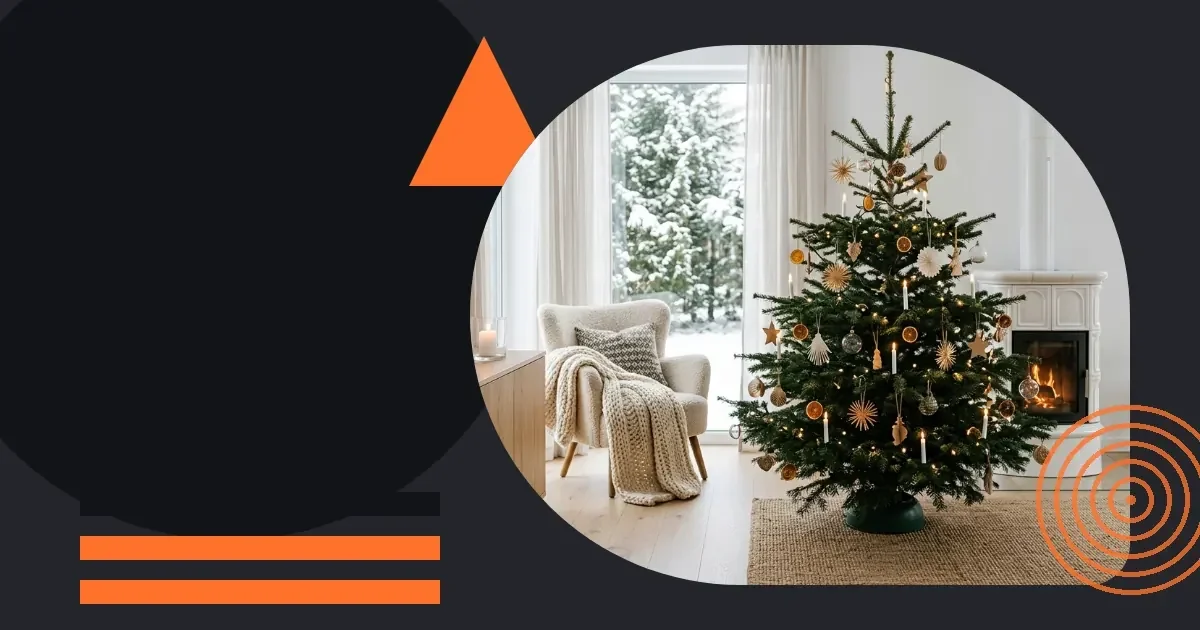
Scandinavian Christmas decorations bring together simplicity, natural materials and soft light to create a seasonal atmosphere that feels both warm and restrained. Nyde explores how this approach to festive decorating balances comfort with clarity, allowing you to shape a space that welcomes without overwhelming. What follows is a guide to the elements that define this style and how to work with them in your own home.
Natural materials as a foundation
Wood, wool, linen and unglazed ceramic form the core of Scandinavian Christmas decoration. These materials carry texture without shine, grounding a room in something tactile rather than purely visual. A wooden bowl filled with pine cones, a linen table runner left unadorned, or candle holders turned from pale birch each add presence without competing for attention.
Dried orange slices, cinnamon bundles and sprigs of fir or eucalyptus bring scent alongside their appearance. Hung on a branch propped in a corner or laid flat on a mantelpiece, they age visibly over the season, which becomes part of their appeal rather than a drawback.
Colour choices that recede rather than announce
White, grey, soft red and muted green dominate the palette. These shades sit comfortably against pale walls and natural wood floors, allowing the structure of a room to remain visible even when decorated. A knitted throw in rust or terracotta, a single strand of wooden beads painted white, or a set of paper stars in charcoal grey each contribute without demanding to be the focal point.
Metallic finishes appear sparingly, and when they do, they lean towards brushed brass or blackened steel rather than high-polish silver or gold. The effect is one of understatement, where light catches an edge rather than bouncing off a surface.
Candlelight over electric alternatives
Candles are central to Scandinavian Christmas decoration, used in multiples rather than as single accents. Taper candles in simple metal or ceramic holders, pillar candles on wooden trays, and tea lights in glass votives create layered, shifting light that changes the mood of a room as daylight fades.
Battery-operated alternatives exist for spaces where open flames are impractical, but the flicker and scent of real candles remain part of the intended experience. Grouping candles at different heights and clustering them on surfaces that can be safely monitored allows their warmth to spread without risk.
Arrangements that leave room to breathe
Scandinavian decoration resists the urge to fill every surface. A single branch in a tall vase, three candles on a tray, or a small bowl of ornaments on a side table each occupy space without crowding it. This restraint allows the eye to rest and the individual elements to register more clearly.
Vertical arrangements work particularly well in smaller rooms, where a slender tree or a branch hung with a few paper decorations draws the gaze upward without encroaching on floor space. Horizontal groupings on dining tables or windowsills benefit from odd numbers and varied heights, which prevent the arrangement from feeling too symmetrical or staged.
Paper, straw and handmade ornaments
Traditional Scandinavian ornaments include folded paper stars, woven straw hearts and simple wooden figures. Many are designed to be made at home, which adds a layer of intention to the decorating process. A paper star hung in a window catches morning light; a straw goat placed on a shelf references older traditions without requiring explanation.
Handmade ornaments carry irregularities that distinguish them from mass-produced equivalents. A slightly uneven fold or a loop of twine instead of ribbon becomes part of the character rather than a flaw.
Steps to build a Scandinavian Christmas display
- Clear surfaces of non-seasonal items to establish a neutral base.
- Introduce one natural element—a branch, a bowl of fir cones, a bundle of birch twigs—as an anchor.
- Add candles in varied heights, grouped in threes or fives, on trays or wooden boards.
- Hang paper stars or simple ornaments at eye level or above, spacing them to avoid clutter.
- Layer in textiles—a wool throw, a linen cushion cover—in muted seasonal tones.
- Step back and remove one item if the display feels crowded.
Balancing warmth with restraint
The appeal of Scandinavian Christmas decoration lies in its ability to create warmth without excess. Rooms remain functional and calm, with seasonal elements folding into the existing aesthetic rather than overtaking it. This approach suits those who find heavily themed decoration overwhelming or who prefer interiors that shift gently between seasons rather than transform entirely.
It also accommodates limited storage, as decorations tend to be small, flat or made from materials that compress easily. At the end of the season, a box of paper stars, a few candle holders and a bundle of dried branches occupy far less space than their more elaborate counterparts.
For further ideas on creating calm, functional spaces, explore these guides: Creating a reading nook that works for you, Understanding biophilic design, and Space and light: making a small bedroom feel larger.
This page is for general information only.
Frequently asked questions
Which materials work best for Scandinavian Christmas decorations?
Wood, wool, linen, unglazed ceramic, dried natural elements like pine cones and orange slices, and paper or straw for ornaments all suit this style. The focus is on texture and a muted palette rather than shine or bright colour.
How many candles should I use in a Scandinavian Christmas display?
Candles are used in multiples—groups of three, five or more—at different heights. The aim is layered, shifting light rather than a single focal point, so the number depends on the size of the surface and the effect you want.
Can Scandinavian Christmas decorations work in a small flat?
Yes, the restrained approach and emphasis on vertical arrangements make this style well suited to smaller spaces. A single branch, a handful of paper stars and a few candles create a seasonal atmosphere without overwhelming a room.
Jack Dean