Art Deco interiors: geometry, glamour and rich materials
 Save
Art Deco interior style emerged in the 1920s and 1930s, characterised by bold geometric patterns, luxurious materials and a sense of streamlined elegance. The style takes its name from the 1925 Exposition Internationale des Arts Décoratifs et Industriels Modernes in Paris, where it was first showcased to the world. Nyde walks you through the defining features of this enduring design movement and how its principles shape interiors today.
Origins and influences
Art Deco drew from multiple sources: the angular forms of Cubism, the bold colours of Fauvism, the exotic motifs of Ancient Egypt and the craftsmanship of the Bauhaus. It celebrated modernity and machine-age precision while retaining a taste for opulence. Unlike the flowing curves of Art Nouveau that preceded it, Art Deco favoured sharp lines, symmetry and repetition.
The style became associated with luxury ocean liners, grand hotels and the interiors of cinemas. By the mid-1930s it had reached homes across Europe and America, influencing everything from furniture to light fittings.
Geometric patterns and bold shapes
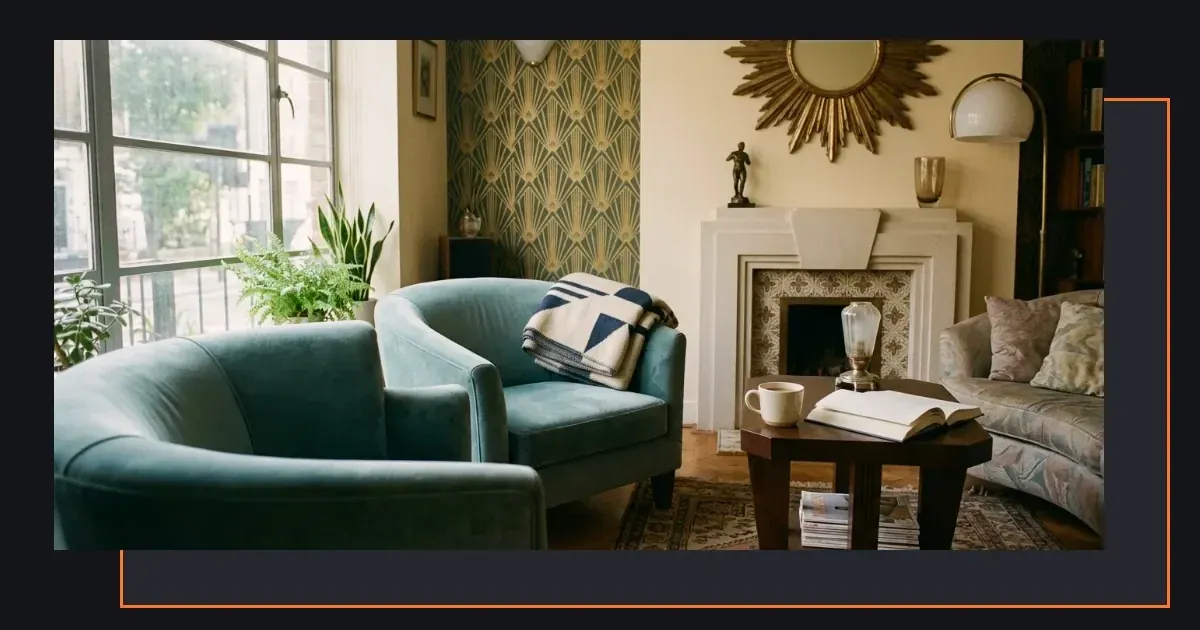
Geometry sits at the heart of Art Deco. Chevrons, zigzags, sunbursts and stepped forms appear on walls, floors and textiles. These patterns create visual rhythm and draw the eye through a room.
Mirrored panels amplify this effect, reflecting light and pattern to make spaces feel larger and more theatrical. A single mirror with a geometric frame can anchor a wall; a series of bevelled mirror tiles arranged in a sunburst or fan shape becomes a focal point.
Symmetry and repetition
Art Deco interiors rely on balanced arrangements. Furniture is often placed symmetrically, with pairs of armchairs flanking a fireplace or matching side tables either side of a sofa. This formality gives rooms a sense of order and confidence.
Materials and finishes
The style favours materials that catch the light: polished chrome, lacquered wood, glass and mirror. Exotic woods such as walnut, ebony and mahogany were used for furniture, often inlaid with lighter woods or ivory to create contrast.
Marble, terrazzo and polished stone appear in flooring and mantelpieces. Metallic finishes in brass, bronze and silver add warmth and shine. Surfaces are typically smooth and glossy rather than textured or matte.
Fabrics and upholstery
Upholstery tends towards rich, tactile fabrics: velvet, silk, satin and leather. Deep jewel tones work well, as do geometric prints in bold colour combinations. Cushions and throws often feature stylised animal or floral motifs, rendered in angular, simplified forms.
Colour palette
Art Deco interiors use strong contrasts. Black and white combinations create drama, often softened with gold, silver or mirrored accents. Deep colours such as emerald green, sapphire blue, ruby red and amethyst purple add richness.
Neutral backgrounds allow bolder elements to stand out. Cream, beige and soft grey walls provide a calm backdrop for lacquered furniture, metallic finishes and patterned textiles.
Furniture and lighting
Art Deco furniture has clean lines and streamlined silhouettes. Armchairs and sofas sit low, with angular arms and stepped or tapered legs. Sideboards and cabinets feature symmetrical panels, inlaid detailing and polished surfaces.
Lighting is sculptural. Chandeliers take geometric forms, with tiered glass or crystal elements that catch and scatter light. Wall sconces and table lamps often have angular shades in chrome or frosted glass, and bases made from marble or polished metal.
Statement pieces
A single bold piece can define a room. A lacquered drinks cabinet, a mirrored console table or an upholstered armchair in jewel-toned velvet anchors the style without requiring every item in the room to match.
Decorative details
Ornament in Art Deco is stylised rather than naturalistic. Sunburst motifs, fan shapes and stepped patterns appear in metalwork, textiles and plasterwork. Mirrors are often etched or framed with geometric borders.
Sculptural objects and ceramics in streamlined forms add to the look. Figurines, vases and decorative bowls in chrome, glass or glazed ceramic sit on mantels and side tables. Art Deco prints and posters, often featuring stylised figures or travel themes, suit the walls.
Bringing Art Deco into your home
- Choose one or two statement pieces with geometric form or luxurious materials, such as a mirrored side table or a velvet armchair in a jewel tone.
- Add geometric pattern through cushions, rugs or wallpaper in chevrons, zigzags or sunbursts, keeping the palette bold and contrasting.
- Incorporate metallic finishes with chrome or brass lighting, picture frames or drawer handles to catch the light and add shine.
- Use symmetry in furniture placement, pairing items on either side of a focal point such as a fireplace or bed.
- Layer rich textures with velvet, silk or satin in upholstery and soft furnishings, balanced by smooth, polished surfaces in wood or glass.
Common approaches compared
| Approach | Effect | Best for |
|---|---|---|
| Full period style | Cohesive, theatrical interiors with authentic materials and symmetry | Large rooms with high ceilings |
| Accent pieces | Art Deco character without overwhelming a contemporary space | Living rooms, bedrooms, hallways |
| Geometric pattern focus | Visual rhythm and boldness through textiles and wallpaper | Smaller spaces where furniture budget is limited |
| Metallic and mirror highlights | Light and glamour added to neutral backgrounds | Dark rooms, narrow hallways, bathrooms |
Balancing period style with modern living
Art Deco works in contemporary homes when balanced with simpler elements. A geometric rug or a pair of chrome wall lights can introduce the style without requiring you to redecorate entirely. Mixing Art Deco pieces with mid-century or modern furniture prevents the room from feeling like a museum.
In open-plan spaces, Art Deco features can define zones. A geometric rug marks a seating area; a lacquered console table separates the dining space from the living area. The symmetry and formality of the style bring structure to larger rooms.
Where to start
Begin with lighting or soft furnishings. A chrome floor lamp or a set of velvet cushions in a jewel tone is easier to introduce than large furniture. Once those are in place, you can add mirrors, prints or a statement piece of furniture that reflects the same geometric, glamorous character. Focus on a few bold choices rather than covering every surface, and let the contrast between Art Deco elements and plainer surroundings create the impact.
This article is for general information only.
Download PDF: Art Deco interior checklist PDF, 27 KB
Further reading
Frequently asked questions
What defines Art Deco interior design?
Art Deco interior design is defined by bold geometric patterns, streamlined shapes, luxurious materials such as chrome, lacquered wood and velvet, and a strong use of symmetry. The style favours dramatic colour contrasts, often combining black, white and metallic finishes with jewel tones.
How can I add Art Deco style to a modern home?
Start with one or two statement pieces such as a geometric mirror, a chrome lamp or a velvet armchair in a rich colour. Add geometric patterns through cushions, rugs or wallpaper, and use symmetry in furniture placement. Mixing Art Deco accents with contemporary pieces prevents the space from feeling too formal or themed.
What colours are typical of Art Deco interiors?
Art Deco interiors use strong contrasts, often pairing black and white with gold, silver or mirrored accents. Jewel tones such as emerald green, sapphire blue, ruby red and amethyst purple add richness, while neutral backgrounds in cream, beige or soft grey let bolder elements stand out.