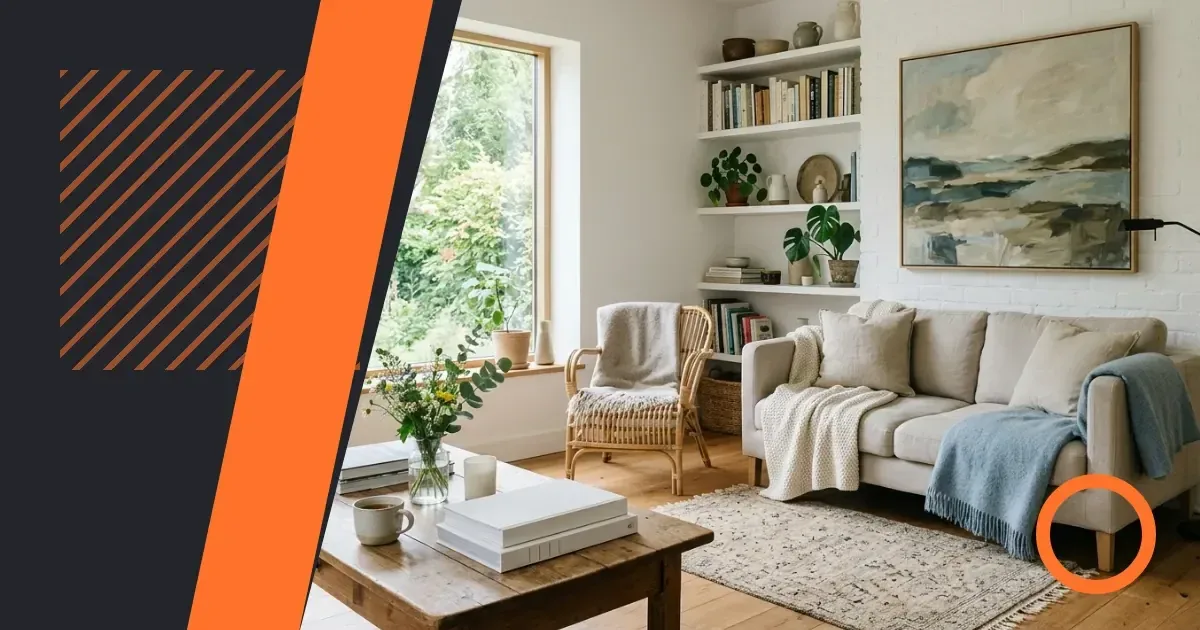
Interior inspiration begins with understanding the spaces you occupy and the way you use them. Whether you're rethinking a single room or approaching your home as a whole, the choices you make about colour, texture, furniture and light shape how comfortable and functional each space becomes. Nyde explores the practical decisions behind those choices, helping you move from an idea to a room that works.
Colour and mood
The colours you choose set the tone before a single piece of furniture arrives. Lighter shades open up small spaces and reflect natural light, while deeper tones create intimacy and focus. A neutral base lets you experiment with accents through textiles, artwork or a single painted feature.
Consider the direction a room faces. North-facing spaces benefit from warmer tones that counter cooler daylight, whilst south-facing rooms can carry cooler palettes without feeling stark. Test samples on different walls and observe them at various times of day before committing.
Furniture placement and flow
A room's layout determines how easily you move through it and how often you actually use each zone. Start by identifying the room's focal point – a window, fireplace or architectural feature – and arrange seating or key pieces to acknowledge it rather than compete with it.
Leave clear pathways between doorways and high-traffic areas. Push furniture away from walls in larger rooms to create conversation zones, and in smaller spaces, choose pieces that serve more than one purpose: a storage ottoman, a sofa bed, a dining table that folds.
Texture and layering
Rooms furnished entirely in smooth, hard surfaces feel cold and echo sound. Layering different textures – linen, wool, wood, metal, ceramic – adds depth without requiring bold colour shifts. A jute rug under a velvet chair beside a rough-hewn side table creates visual interest through contrast alone.
Soft furnishings absorb sound and make a space feel more inhabitable. Curtains, cushions, throws and upholstered pieces all contribute to acoustic comfort as well as warmth.
Natural light and artificial sources
Maximising natural light starts with window treatments that can be fully drawn back and mirrors positioned to bounce light deeper into the room. Avoid heavy pelmets and dark frames that shrink the glazed area visually.
Artificial lighting needs layering too: ambient ceiling fixtures, task lamps for reading or food preparation, and accent lighting to highlight artwork or architectural details. Dimmer switches let a single room shift from workspace to retreat without changing a thing.
Storage that disappears
Clutter competes with every other design decision you make. Effective storage hides what you don't need on display whilst keeping daily essentials within reach. Built-in solutions – alcove shelving, under-stair cupboards, window seats with lift-up lids – use awkward spaces that freestanding furniture can't.
Vertical storage frees floor area. Tall bookcases, wall-hung cabinets and peg rails draw the eye upward and make rooms feel taller. Keep surfaces as clear as you can; a single beautiful object has more impact than a crowded arrangement.
Small changes with large effects
Not every transformation requires structural work or a replaced suite. Swapping cabinet handles, repainting skirting boards, changing lampshades or regrouping existing furniture can shift the character of a room in an afternoon.
- Remove one piece of furniture from each room and see if the space breathes better without it.
- Repaint the largest wall in a room to test a new palette before committing to all four.
- Replace overhead bulbs with warmer colour temperatures to soften harsh light.
- Edit shelves and surfaces down to half their current contents, storing the rest for a month.
Personal touches that matter
Inspiration galleries and showrooms present perfected versions of rooms that nobody actually lives in. Your home needs to reflect the activities, hobbies and routines that fill your day. A reading chair positioned for afternoon light, a kitchen pinboard for family schedules, a hallway hook at child height – these details make a house function as yours.
Display what you genuinely like rather than what trends dictate. A collection of ceramics you've gathered over years, framed photographs from places you've been, or textiles inherited from family all carry more meaning than items bought to fill a gap.
Further reading
Related guides on this site cover specific aspects in greater depth. Space and light: making a small bedroom feel larger explores strategies for compact rooms, while Creating a reading nook that works for you addresses dedicated zones within larger spaces. Arranging a bookshelf that balances function and display tackles one of the most visible storage challenges, and Accent walls: what they are and whether you need one examines a popular decorating choice in practical terms.
Disclaimer: This page is for general information only. We do not sell any goods or services.
Frequently asked questions
How do I choose a colour scheme for a room?
Start with the room's natural light and how you use the space. North-facing rooms benefit from warmer tones, whilst south-facing ones can carry cooler palettes. Test paint samples on different walls and observe them throughout the day before deciding.
What is the best way to arrange furniture in a small living room?
Identify the room's focal point and arrange seating to face it. Keep pathways clear between doorways, and consider multi-purpose pieces like storage ottomans. Pulling furniture slightly away from walls can create a more intentional layout even in tight spaces.
How can I make a room feel cosier without redecorating?
Layer textures through soft furnishings like throws, cushions and rugs. Adjust your lighting by adding table or floor lamps with warmer bulbs, and reduce clutter on surfaces so the room feels calmer. Small changes to light and texture shift the atmosphere quickly.
Jack Dean