Minimalist living rooms
 Save
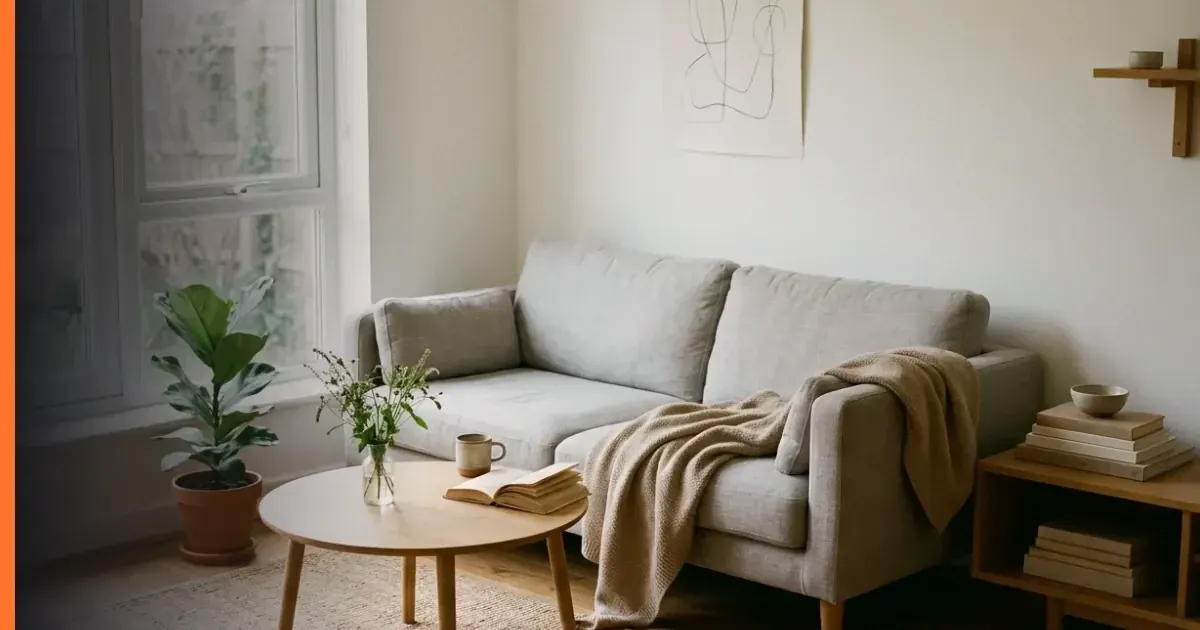
A minimalist living room strips away excess to reveal what matters: space, light and the few pieces that earn their place. Nyde walks through the choices that turn an empty room into a calm, functional space you'll want to spend time in.
Core principles of minimalist living
Minimalism in a living room means every object justifies itself through use or meaning. A sofa, a table, a lamp—each answers a genuine need rather than filling a gap. The eye travels freely when there's less to catch it.
Surfaces stay clear because storage lives out of sight. Drawers, closed cabinets and fitted cupboards hold what would otherwise accumulate on shelves and coffee tables. What remains visible is there by choice, not default.
Colour palettes run narrow. Whites, greys, soft beiges and occasional blacks create continuity between walls, furniture and floors. A single accent shade can anchor the room without breaking the calm.
Furniture selection and placement
Choose fewer pieces with clean geometry. A three-seater sofa in linen or leather, a low wooden coffee table, one armchair—the arrangement leaves walking space on all sides. Furniture floats away from walls where the room allows it, defining zones without barriers.
Legs matter. Sofas and chairs raised on slender legs let light pass underneath, making the room feel less grounded and more open. Blocky, skirted furniture can work, but it occupies space more heavily.
Avoid matching sets. A sofa and chair in different materials but similar tones feel deliberate rather than catalogue-bought. Mixing timber finishes—oak with walnut, for example—adds warmth without clutter.
Scale and negative space
Furniture scaled to the room prevents overcrowding. A large sofa in a small living room devours floor area; a compact two-seater leaves breathing room. Negative space around each piece is part of the design, not leftover area.
Lighting strategies
Layer light sources instead of relying on a central ceiling fixture. A floor lamp beside the sofa, a table lamp on a sideboard and recessed spots or track lighting overhead let you adjust brightness and mood throughout the day.
Natural light takes priority. Sheer curtains or roller blinds in pale fabric diffuse daylight without blocking it. Where privacy isn't a concern, leaving windows undressed maximises the connection to outside space.
Dimmers on every circuit give control. Bright light for reading or working, low light for evenings—the same room shifts character without moving a single object.
Storage and display
Built-in storage hides daily clutter. Alcove shelving with cupboards below, a low media unit with closed compartments, or a full-height wardrobe along one wall keeps books, electronics and paperwork out of view. Open shelving works only when what sits on it looks intentional.
Display very little. A single ceramic piece, a small stack of art books, a plant—one or two objects per surface is enough. Rotating what's on show keeps the room from feeling static.
Concealing technology
Cables, remote controls and charging bricks disrupt clean lines. Cable management boxes, holes drilled through furniture backs and wireless charging pads reduce visible wiring. Screens can hide behind sliding panels or cabinet doors when not in use.
Texture and material
A monochrome palette needs varied textures to avoid flatness. Linen upholstery, a wool rug, oak flooring, a ceramic lamp base—different surfaces catch light differently and add depth without colour.
Natural materials age visibly, which suits minimalism's honesty. Timber darkens or lightens, leather creases, linen softens. Synthetic fabrics and high-gloss finishes can look sterile unless balanced with something organic.
Rugs define seating areas and soften acoustics. A large jute or wool rug grounds the sofa and coffee table, its edges visible on all sides rather than tucked beneath furniture.
Common mistakes and how to avoid them
Rooms stripped too bare feel cold rather than calm. The line between minimal and uncomfortable sits at functionality—if you can't sit comfortably, read easily or set down a drink, the room isn't working.
Neglecting softness leaves a space harsh. Cushions, throws and upholstered seating introduce comfort. Even in a pared-back scheme, textile layers matter.
Ignoring personal items makes a room generic. One framed photograph, a favourite book on the coffee table, a piece of pottery you chose—small personal touches distinguish your living room from a show flat.
Maintaining the look over time
Regular editing prevents creep. Every few months, assess what's accumulated and remove anything that no longer serves a purpose or brings satisfaction. Minimalism is a practice, not a one-time clear-out.
Everything needs a home. When new objects arrive, they either displace something existing or occupy a designated spot. Without this discipline, surfaces fill again.
Cleaning becomes quicker. Fewer objects mean fewer surfaces to dust and fewer obstacles when vacuuming. The aesthetic choice has a practical payoff.
Where to go next
Other rooms follow similar principles with context-specific adjustments. Space and light: making a small bedroom feel larger explores strategies that overlap with minimalist thinking. Accent walls: what they are and whether you need one considers how a single bold choice fits into a restrained scheme.
A minimalist living room isn't about deprivation. It's about making deliberate choices so that what remains has room to matter.
This article is for general information only.
Frequently asked questions
What defines a minimalist living room?
A minimalist living room keeps only furniture and objects that serve a clear purpose or hold personal meaning. Surfaces stay uncluttered, storage is hidden, and a limited colour palette creates visual calm.
How do I choose furniture for a minimalist space?
Select fewer pieces with clean lines and proportions that suit the room size. Raised legs on sofas and chairs help the space feel open. Mix materials and finishes rather than buying matching sets.
Can a minimalist living room still feel warm and comfortable?
Yes. Layering textures through rugs, cushions, throws and natural materials like timber and linen adds warmth. Personal items in small numbers prevent the room from feeling impersonal.