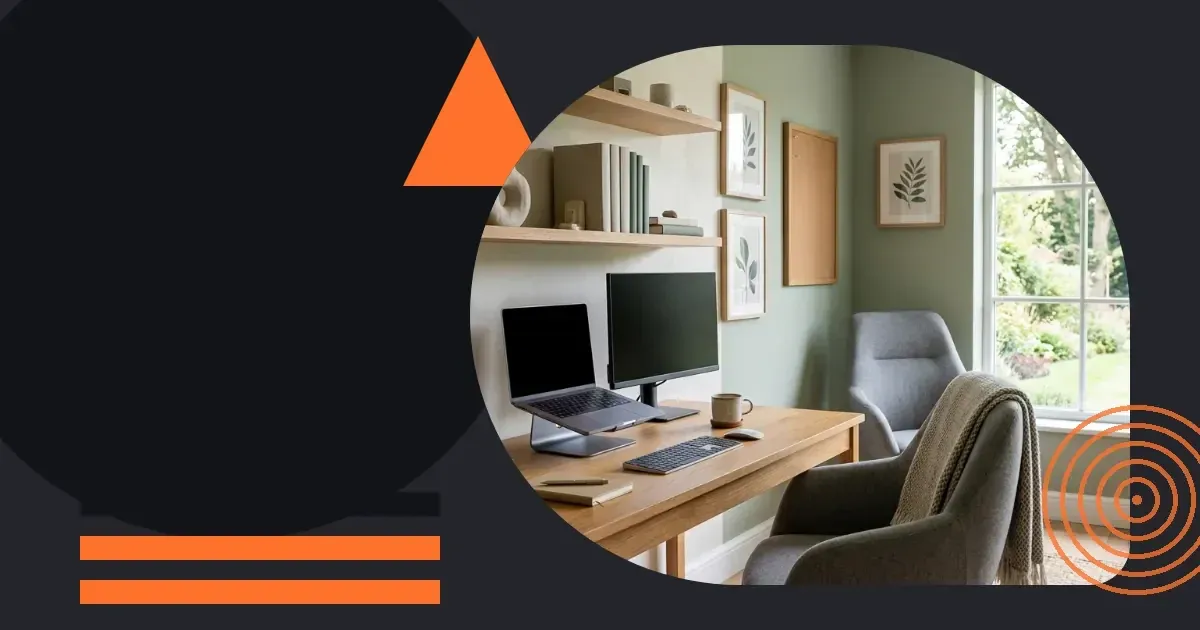
The home office has moved from the spare room to the centre of daily life, and the way people furnish it has changed along with that shift. Nyde tracks the practical trends shaping workspaces at home — flexible layouts, natural materials, better lighting and the tools that support focus without sacrificing comfort.
Flexibility over fixed layouts
Workspaces that adapt to different tasks have replaced the single-desk setup. A height-adjustable desk lets you alternate between sitting and standing; a trolley holds materials that move between rooms. The trend is towards furniture that responds to the work rather than locking you into one posture or one corner.
Mobile storage — a small filing cabinet on castors, a side table with shelves — means the office follows the task. Morning video calls happen at the desk; afternoon reading moves to the armchair with a laptop stand on your knee.
Natural materials and biophilic elements
Wood, linen, ceramic and cork have become staples of home office design. A solid oak desk surface, a wool desk mat or terracotta plant pots introduce texture without ornament. These materials age visibly and bring a sense of permanence to a space defined by screens.
Plants remain central — not just a single succulent, but trailing pothos on a shelf, a fern beside the window or herbs in a trough along the sill. Greenery improves air quality and softens the geometry of technology.
Texture layering
- Woven baskets for cable management and stationery
- A jute or wool rug to define the workspace within a larger room
- Linen curtains or bamboo blinds for diffused daylight
- Stone or ceramic desk accessories that double as paperweights
Task lighting that replaces overhead glare
Overhead ceiling lights are being replaced with layered task lighting — a desk lamp with adjustable brightness, a corner floor lamp that bounces light off the wall, or an articulated arm lamp clamped to the desk edge. Warm white LEDs reduce eye strain during long stretches of screen work.
Daylight remains the primary source wherever possible. Desks face windows or sit perpendicular to them; sheer curtains diffuse harsh afternoon sun without blocking it entirely. For evening work, dimmable lamps let you adjust the intensity as natural light fades.
Cable management as design
Cables that once tangled behind desks are now routed, clipped or hidden entirely. Under-desk trays hold power strips; cable sleeves bundle multiple cords into a single line; adhesive clips guide wires along table legs. The result is a clearer surface and less visual noise.
Wireless peripherals — keyboards, mice, chargers — have simplified setups further. A laptop, a single monitor and a charging pad can sit on a desk with just one visible power cable running to the wall.
Acoustic treatment for shared spaces
Sound management has become essential in homes where multiple people work or study. Fabric-wrapped acoustic panels mounted on the wall absorb echoes; a thick rug dampens footsteps; heavy curtains reduce noise bleed from adjacent rooms. For video calls, a bookshelf stacked with varied materials behind the desk acts as a diffuser.
Headphones remain the simplest solution, but spatial changes — a door that closes fully, a room divider or even a strategically placed upholstered chair — make a measurable difference in concentration and call clarity.
Personal curation over catalogue sets
The trend has moved away from matching furniture sets towards pieces chosen individually. A vintage desk paired with a contemporary chair; open shelving beside a mid-century filing cabinet; a handmade ceramic pen holder next to a steel monitor arm. The office reflects the person working in it rather than a single aesthetic category.
Art, photographs and objects from outside the office genre — a framed textile, a small sculpture, a bowl inherited from family — make the space feel inhabited rather than staged. Function remains the anchor, but personality fills the gaps.
Step-by-step workspace refresh
- Clear the desk surface entirely and clean it.
- Return only the items you use daily — everything else goes into a drawer or a shelf.
- Position your chair and monitor so your eyeline meets the top third of the screen.
- Route cables through clips or a tray; label power adapters if you have more than two.
- Add one source of task light and one plant within arm's reach.
- Test the arrangement for half a working day before making permanent changes.
Related guides
Explore other practical advice on making the most of your home:
- Space and light: making a small bedroom feel larger — techniques for expanding perceived space
- Creating a reading nook that works for you — carving out a dedicated corner for focus and rest
- Understanding biophilic design — bringing natural elements into interiors
Disclaimer: This article is for general information only. Nyde does not sell goods or services.
Frequently asked questions
What defines a flexible home office layout?
A flexible layout uses furniture that adjusts to different tasks — height-adjustable desks, mobile storage and seating that works for both desk work and reading. The workspace adapts rather than locking you into one posture or location.
Which natural materials work best in a home office?
Wood, linen, cork, wool and ceramic introduce texture and age well. A solid timber desk, a woven cable basket or a terracotta plant pot brings warmth without clutter. These materials pair naturally with plants and soften the hard edges of screens and peripherals.
How can I improve lighting without replacing ceiling fixtures?
Add a desk lamp with adjustable brightness, position your workspace near a window and use sheer curtains to diffuse daylight. A floor lamp in the corner or an articulated arm lamp clamped to the desk gives you control over task lighting without overhead glare.
Jack Dean