Contemporary watercolour interiors
 Save
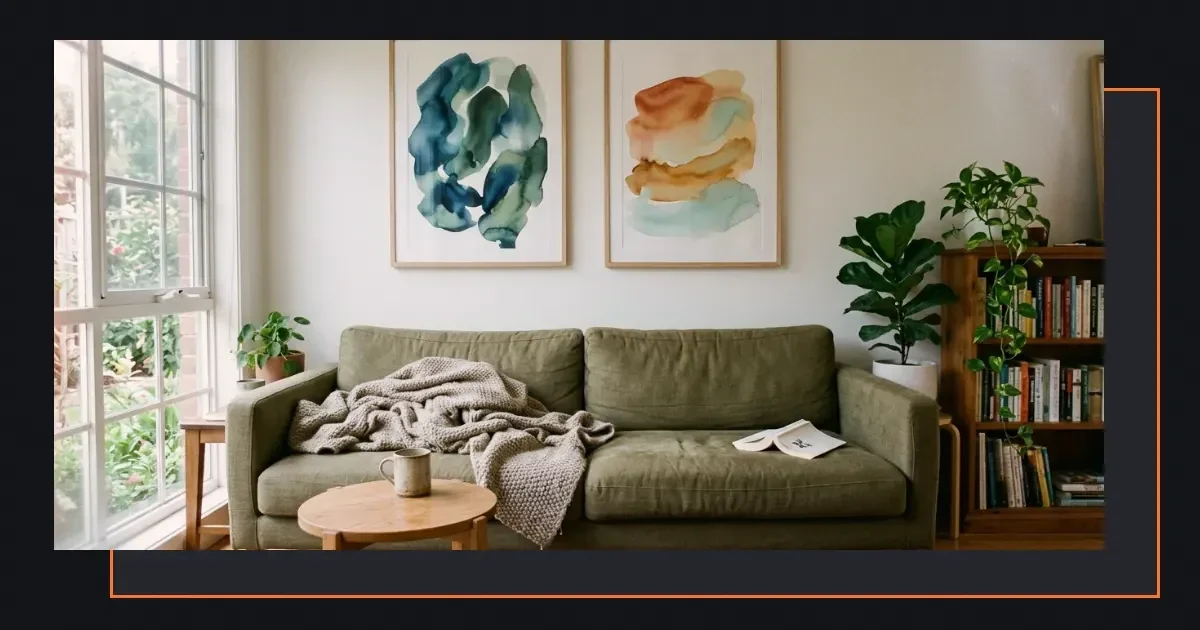
Watercolour-inspired interiors borrow the soft, translucent quality of paint diluted with water—fluid colour boundaries, layered tones and a sense of light moving through pigment. These palettes work particularly well in contemporary homes where clean lines benefit from a gentler colour story. Nyde walks through practical ways to introduce this approach, from wall finishes to textiles and the choices that make the effect feel deliberate rather than accidental.
Colour selection and tone
Watercolour palettes rely on desaturated hues—colours that sit between full intensity and white, where enough pigment remains to register as colour but the finish feels airy. Dusty rose, soft sage, pale terracotta and muted indigo all carry this quality. The trick is to avoid crisp, opaque shades; instead, choose tones that seem to have been mixed on wet paper.
A single room can hold two or three of these colours if they share a similar saturation level. Pairing a chalky blue with a faded coral works because both sit at the same point on the spectrum between pigment and whitewash. Introducing a fully saturated accent breaks the continuity—the watercolour effect depends on restraint.
Wall treatments and finishes
Matt and eggshell finishes echo the flat, absorbent surface of watercolour paper. Gloss or satin interrupts the effect by reflecting light sharply rather than diffusing it. Some paint manufacturers offer limewash or clay-based ranges that dry with a slight texture, reinforcing the hand-painted feel.
Ombré or gradient walls—where one colour fades into another or into white—mimic the wet-on-wet technique painters use. These are labour-intensive to execute cleanly, so many people prefer a single soft tone on each wall and introduce the layered effect through fabric or artwork instead.
Painted panels and dado rails
Dividing a wall horizontally with a dado rail and painting the lower section in a slightly deeper version of the upper colour creates the impression of a wash pooling at the bottom. The transition should be gentle; a jump from pale peach to charcoal defeats the purpose.
Textiles and soft furnishings
Linen, cotton voile and unbleached muslin hold dye unevenly, leaving subtle variations in tone that reinforce a watercolour palette. Cushions, curtains and throws in these fabrics add texture without the solid blocks of colour that flatten a scheme.
Printed textiles work when the design itself mimics watercolour—blurred edges, overlapping washes, colours that bleed into one another. Geometric prints and sharp florals sit awkwardly in this context; the eye expects softness and reads anything crisp as a mismatch.
Layering and transparency
Sheer curtains in off-white or pale grey soften incoming light and add a translucent layer between the room and the window. Layering a lightweight throw over a sofa in a complementary hue builds depth in the same way a painter adds a second wash once the first has dried.
Furniture and material choices
Pale timber, whitewashed oak and light ash keep the overall effect airy. Dark wood or black metal frames introduce too much contrast and anchor the palette in a way that feels at odds with the floating quality of watercolour.
Upholstery in linen or cotton twill, rather than leather or velvet, maintains the matte, breathable character. A single piece in a richer tone—such as a faded rust armchair against pale blue walls—can work if the colour itself remains desaturated.
Lighting and shadow
Natural light is the most reliable partner for a watercolour palette. Rooms with large windows or skylights allow the colours to shift subtly as the day progresses, just as watercolour on paper changes depending on the angle of light.
Artificial lighting should be warm and diffused. Ceiling-mounted fixtures with fabric shades or wall sconces that cast light upward prevent harsh shadows. Cool-toned LED bulbs drain the warmth from already pale colours and leave the room feeling clinical.
Common missteps
Adding too many colours—even soft ones—creates visual noise rather than the calm a watercolour palette is known for. Three or four hues across an entire open-plan space is usually enough; more than that and the scheme loses coherence.
Mixing in high-gloss surfaces or highly saturated accent pieces disrupts the balance. A bright turquoise vase or a glossy black coffee table will dominate the room because nothing else competes for attention at that intensity level.
Overlooking the role of white space is another frequent mistake. Watercolour interiors need breathing room—bare walls, uncluttered surfaces and negative space allow the soft colours to register properly. Filling every corner weakens the effect.
Related approaches
Readers building a gentle, layered palette may also find it useful to explore creating a reading nook that works for you, where soft colour and considered lighting combine to shape a focused corner. For those working with limited floor area, space and light: making a small bedroom feel larger covers techniques that complement a pale, airy colour scheme.
Frequently asked questions
How do you prevent a watercolour palette from looking washed out?
Introduce variation in texture and material rather than relying on colour alone. Linen, cotton and pale timber add depth through surface quality, while a single slightly deeper tone in upholstery or a rug anchors the scheme without breaking the soft character.
What type of artwork suits a watercolour interior?
Can you use a watercolour approach in a kitchen or bathroom?
Yes, though practicality requires durable finishes. Choose matt or satin tiles in soft tones, pale grout and timber-look or light stone surfaces. Avoid high-gloss cabinetry and bright white sanitaryware, which introduce too much contrast and undermine the gentle palette.
Jack Dean