Making the most of the space you have
 Save
How you use the space in your home affects how comfortable it feels and how well it works for you day to day. Nyde brings together practical ideas for arranging rooms, choosing furniture that fits and finding storage that makes sense for the way you live. What follows are approaches you can adapt to any room, whatever its size or shape.
Understanding the space you are working with
Walk into a room and notice where your eye goes first. That spot – a window, a fireplace, an alcove – is often the natural focal point, and arranging furniture around it tends to make the room feel more settled. Measure the longest wall and the width of doorways before you commit to a new sofa or wardrobe; a piece that looked fine in the shop can overwhelm a room if it is even a few inches too wide.
Light changes how a space reads. A north-facing room stays cooler and benefits from warm paint tones and layered lighting, while a south-facing one can take darker walls without feeling closed in. Stand in the room at different times of day to see where shadows fall and where you will need extra light for reading or cooking.
Furniture placement and flow
Arrange seating so people can talk without raising their voices. In a living room that usually means chairs and sofas within a few feet of one another, angled slightly inward. Leave enough space to walk through – a gap of around two feet is comfortable for most people – and avoid blocking the natural path between the door and the window.
Floating furniture away from the walls can make a room feel larger, not smaller. A sofa pulled a foot forward creates space for a console table or a floor lamp behind it, and the room gains depth. In a bedroom a bed centred on the longest wall, with a few inches of clearance on each side, often works better than one pushed into a corner.
Zones within a single room
A large room can feel aimless without clear zones. Use a rug to anchor a seating area, a bookshelf to separate a dining space from a sitting area, or a desk positioned at a right angle to the wall to carve out a workspace. Each zone needs its own lighting – a pendant over the table, a task lamp on the desk – so you can use one part of the room without lighting the whole space.
Storage that works with your rooms
Good storage sits where you need it and holds what you actually use. Start by sorting what you own into categories – books, clothes, kitchen equipment, paperwork – and then decide where each category lives. Clothes you wear every week belong in the bedroom; coats and shoes you reach for daily go near the door; serving dishes you use twice a year can go higher or further back.
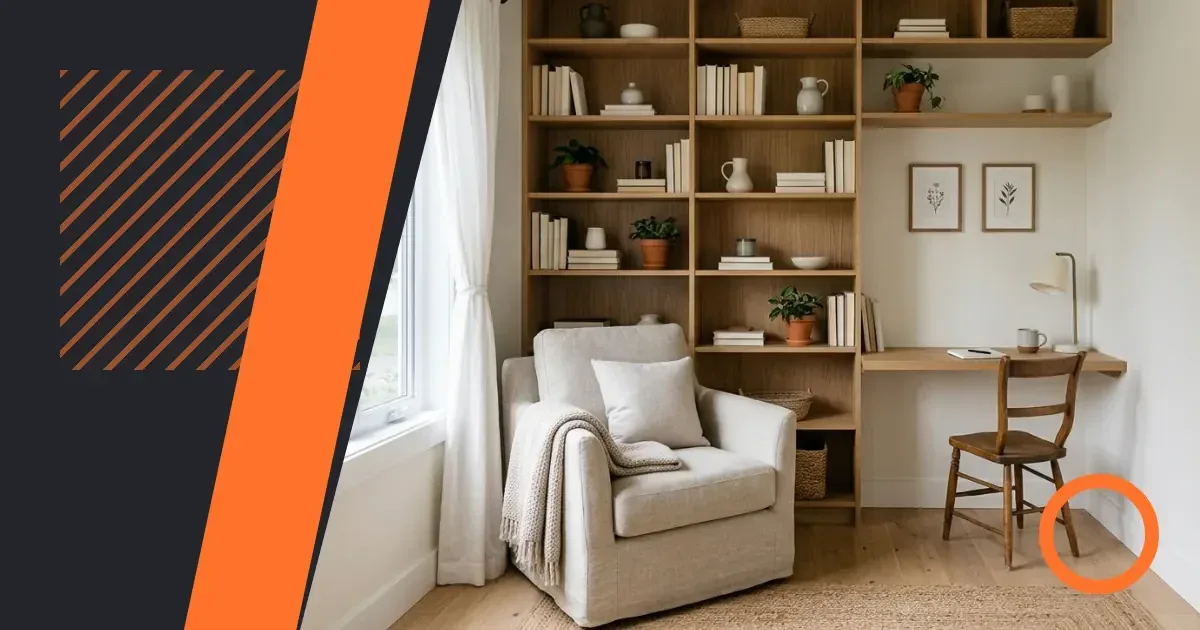
Built-in storage makes the most of awkward spaces – the alcoves beside a chimney breast, the triangle under the stairs, the wall behind a bed. Freestanding pieces give you flexibility if you move house or change how a room is used. A tall narrow bookcase takes up less floor space than a low wide one and draws the eye upward, which can make a ceiling feel higher.
Decluttering without losing what matters
Keep what you use, what fits your life now and what you genuinely value. Everything else is negotiable. A systematic approach helps: work through one category at a time rather than one room at a time, so you see the full volume of what you own. Donate or sell what no longer serves you, and find a specific home for everything you keep.
Colour, texture and the sense of space
Pale walls reflect light and can make a small room feel airier, but a dark colour used consistently – on walls, ceiling and woodwork – can blur the boundaries of a room and create a sense of calm. Mid-tones are forgiving and work well in rooms that serve more than one purpose. Paint one wall a different shade only if it genuinely highlights an architectural feature; an arbitrary accent wall can chop a room into pieces.
Layer textures to add warmth without clutter. Linen curtains soften a window, a wool rug adds comfort underfoot, a wooden chair or a ceramic lamp brings weight and interest. Too many smooth, reflective surfaces – glass, metal, gloss paint – can make a room feel cold, while too many soft textures can deaden sound and light.
Practical steps you can take today
- Clear one surface completely – a kitchen worktop, a bedside table, a hallway console – and put back only what you use every day.
- Move one piece of furniture away from the wall and see whether the room flows better; if it does, leave it there.
- Change a lampshade or reposition a lamp so the light falls where you sit to read, rather than in the centre of the room.
- Measure the floor space in front of your sofa or bed, then check that you have left enough room to move comfortably; adjust if needed.
- Group small objects – candles, photo frames, ornaments – on a tray or a shelf, rather than scattering them across every surface.
Common mistakes and how to avoid them
Pushing all the furniture against the walls leaves a dead space in the middle of the room and makes conversation awkward. Buying storage before you have sorted what you own means you end up storing things you do not need. Hanging curtains at window-sill height cuts the room in half visually; fixing the pole closer to the ceiling makes the window – and the room – look taller.
Overhead lighting alone flattens a room and casts unflattering shadows. Add lamps at different heights – a floor lamp beside a chair, a table lamp on a sideboard – and you can adjust the mood and the functionality of the space. A rug that is too small makes furniture look as though it is floating; extend it so the front legs of the sofa and chairs sit on it, and the room will feel anchored.
Where to go next
Once you have a sense of how your space works, you can refine individual rooms and try ideas that suit the way you use them. Space and light: making a small bedroom feel larger explores layout and lighting choices for smaller rooms, while Creating a reading nook that works for you shows how to carve out a dedicated corner without major building work. For arranging the details, Arranging a bookshelf that balances function and display offers a practical approach to shelving that looks considered without feeling staged.
Frequently asked questions
How much space should I leave around furniture?
Leave around two feet between pieces so you can move through the room comfortably. In a seating area, keep chairs and sofas close enough that people can talk without raising their voices – usually within a few feet of one another.
What is the best way to arrange furniture in a small room?
Start with the largest piece – the sofa or bed – and position it where it does not block the natural flow from door to window. Float smaller pieces away from the walls to create depth, and use vertical storage to keep the floor clear.
Should I paint a small room a light colour?
Pale colours reflect light and can make a room feel more open, but a dark shade used on all surfaces can blur boundaries and create a calm, cocoon-like effect. The choice depends on how much natural light you have and how you want the room to feel.
Jack Dean